
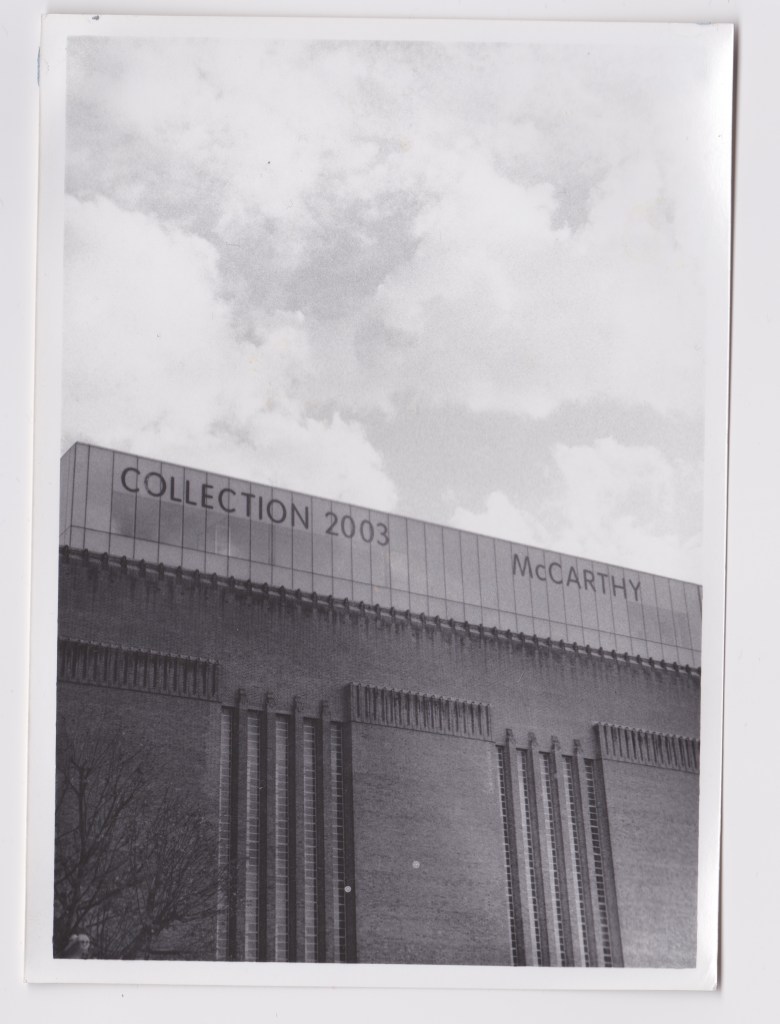
Going way back: in 2003 I was at Tate Modern talking about Constance Babington Smith and her trailblazing aerial reconnaisance. In 2006 I went to the Beaconsfield Gallery, London, sharing my thoughts on the idea of The Trip:
In the Trip, it is really important that the crossing of the threshold is not smooth, but rather disturbed or turbulent; that there are elements of playfulness and the risk of accident; and that something is added during the moment of crossing. Trip is the moment at which the rogue element comes in at the precise time and skews the progression so that the final state is different or more enormous, it’s other than what we could have expected. There’s a perfect example of all the characteristics of The Trip, outside of literature, in the 1967 death of Donald Campbell, speed-boat racer. Plenty of sportspeople die in the pursuit of their sport, but what sets Campbell apart and qualifies his action as a case of Trip is the fact that something extra comes in at the moment of transformation. Ayrton Senna’s Mayday demise, for example, was simply a progression from going fast in a vehicle to not doing so, matched by being alive to being dead. This is not Trip, it is simply change. In Campbell’s case, in contrast, the two states switched between are not corresponding ones. It’s not just that he crashed. It’s that he went extremely fast and hit turbulence at a particular border area between speeds, and this caused him not to go faster or slower – elements along a continuum – but to disappear (for thirty years).
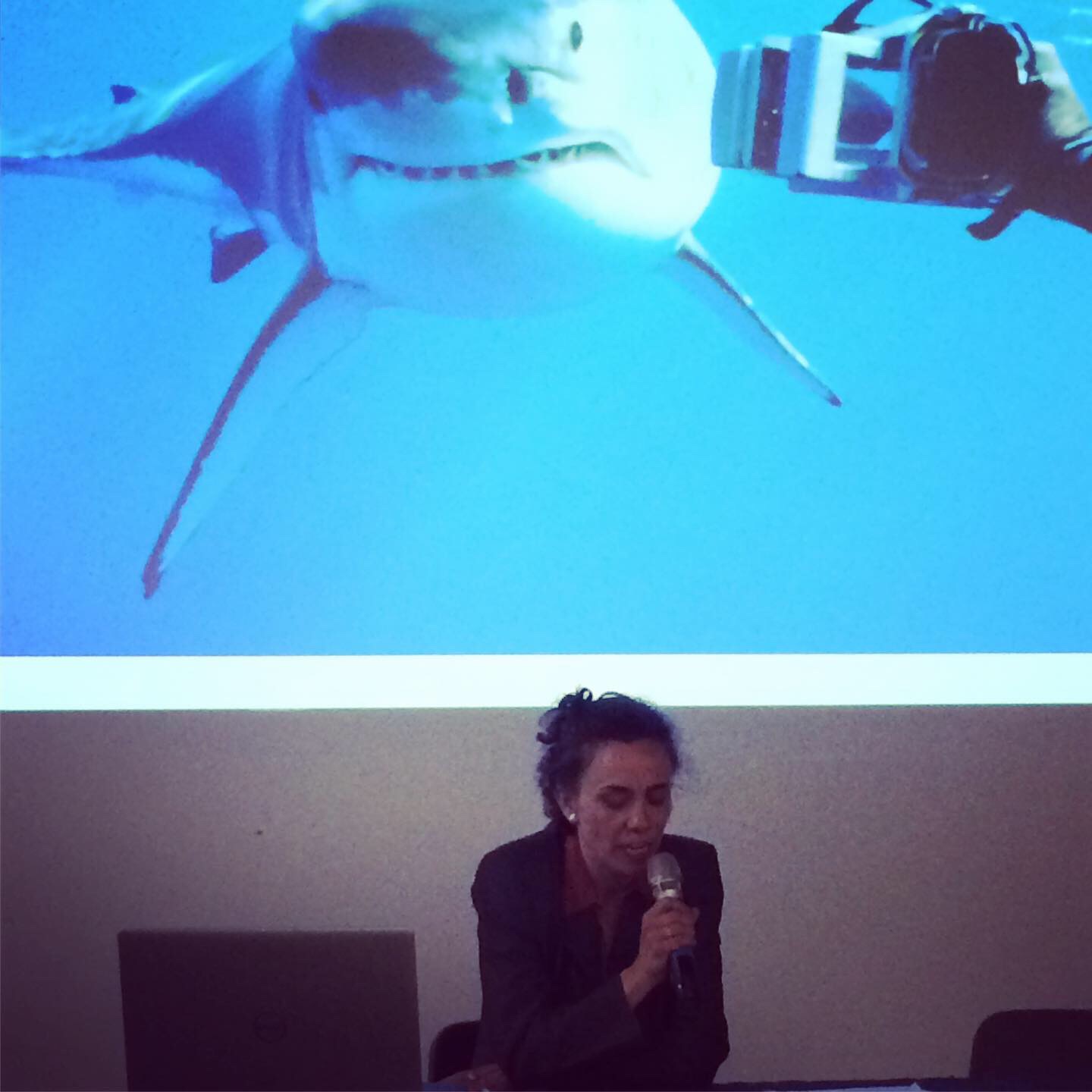
Zooming on through the decades, in May 2019 I went to the Haus der Kulturen der Welt, Berlin, to speak on Reading Sharks and Sharks That Read at the Miss Read art book fair, putting forward an idea about sharks as ideal, and slow, readers and cinematic audiences. Thanks to Ivan, Azores, for discussion. Extract:
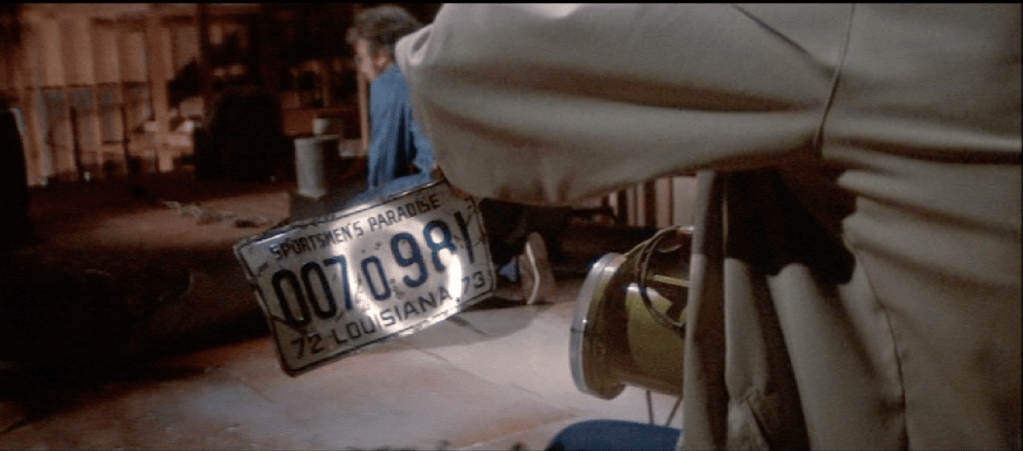
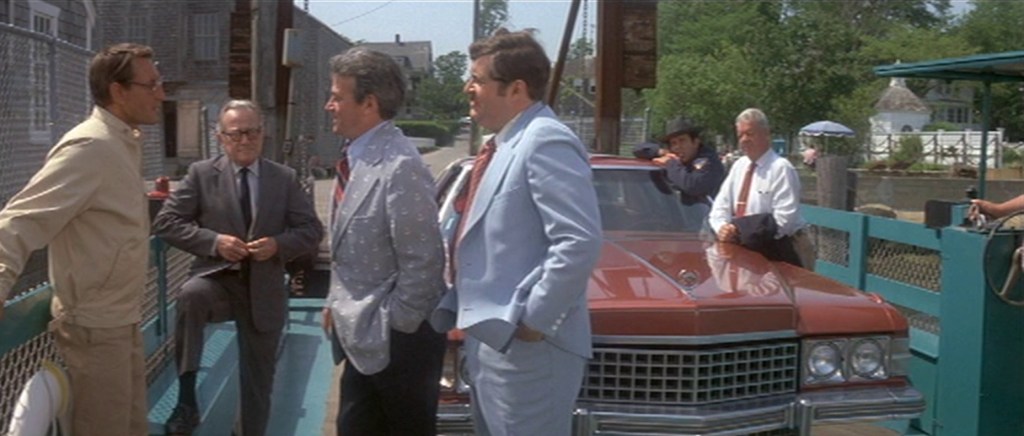
This is a still from the film of Jaws, 1975, of Hooper and Brody illicitly dissecting a shark that has been caught. They don’t believe it’s the same shark that’s been killing citizens; they want to check whether there are any body parts inside it. They are reading the shark. But when Hooper gropes inside, he gets a number plate, with a state name on. Sharks eat text.
In May 2019 I was discussing Sharks in Loops in Sharks in Books at the Tate Modern, talking about sharks and obituaries as models of electrical circuits, as part of the Offprint art publishing fair:
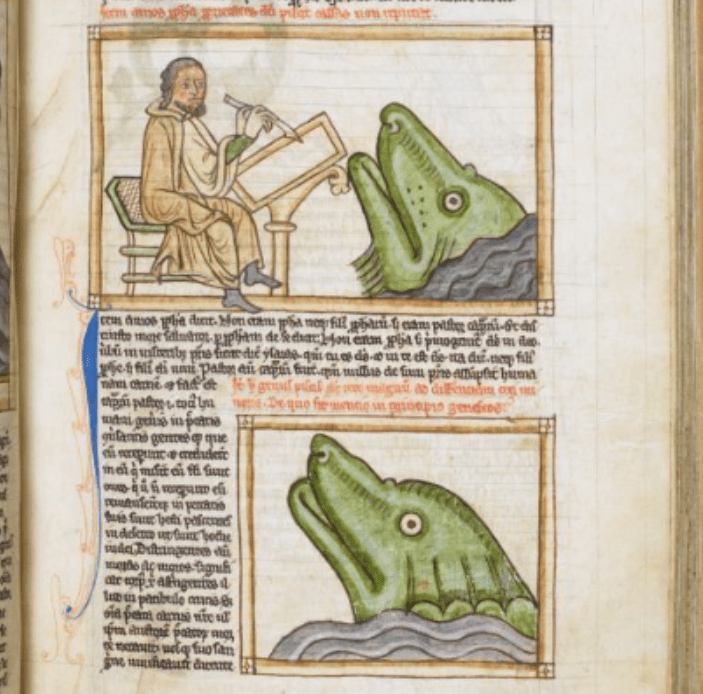
The scholars at the British Library describe this image in two ways, once as ‘a man drawing a whale’, and once as ‘Amos, the Hebrew prophet, writing about a whale’. Though his screen, as we see it in the top image, is still blank. Or possibly transparent. If we go with the first description, a man drawing a whale, we could interpret that the lower picture is the very drawing he’s made; it’s the product of the activity in the top picture. Though his tool looks also rather scalpel-like: he’s definitely in some sense dissecting the creature. He’s got his screen there in front of him, ready to increase his understanding of the shark. And I want to draw to your attention the sense of reciprocity in this image: the man looks at the shark (creature), and the shark looks right back at the man. It’s a two-way process; a line of sight, a vision is circulating between them. And if that’s not enough, check out the lower image again: now the shark seems to be looking out at us, straight out through the viewfinder, as we look in at it. There is interchange, a cycle of sight.
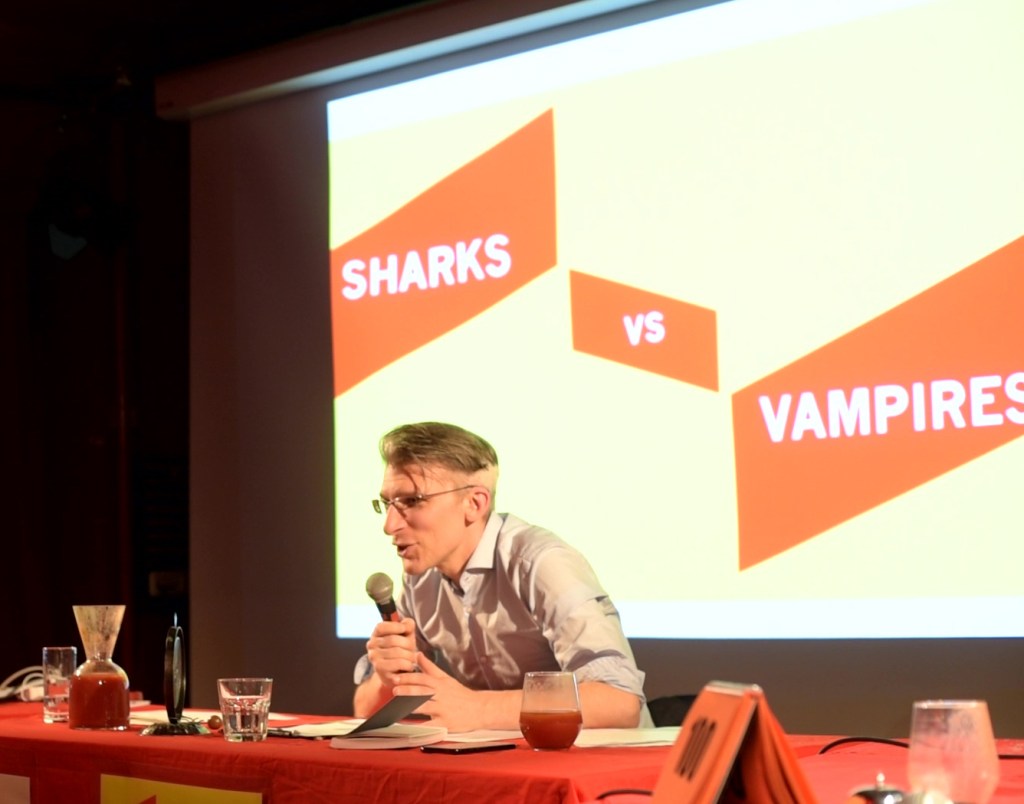
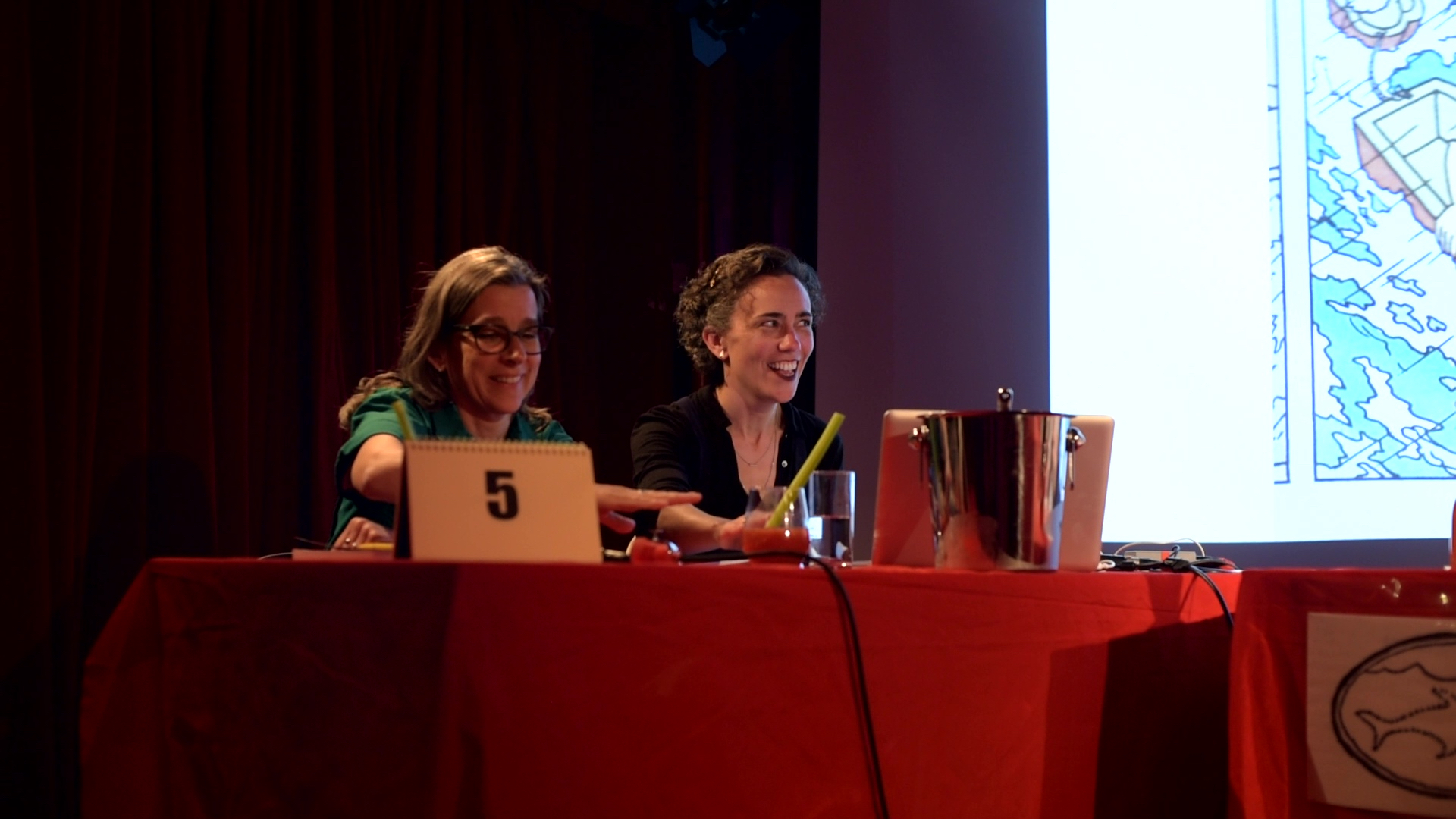
In May 2019 I was in Berlin’s Roter Salon, appearing in Sharks vs Vampires: Doubles That Bite. You can watch edited highlights of the event here, and read the match report here.
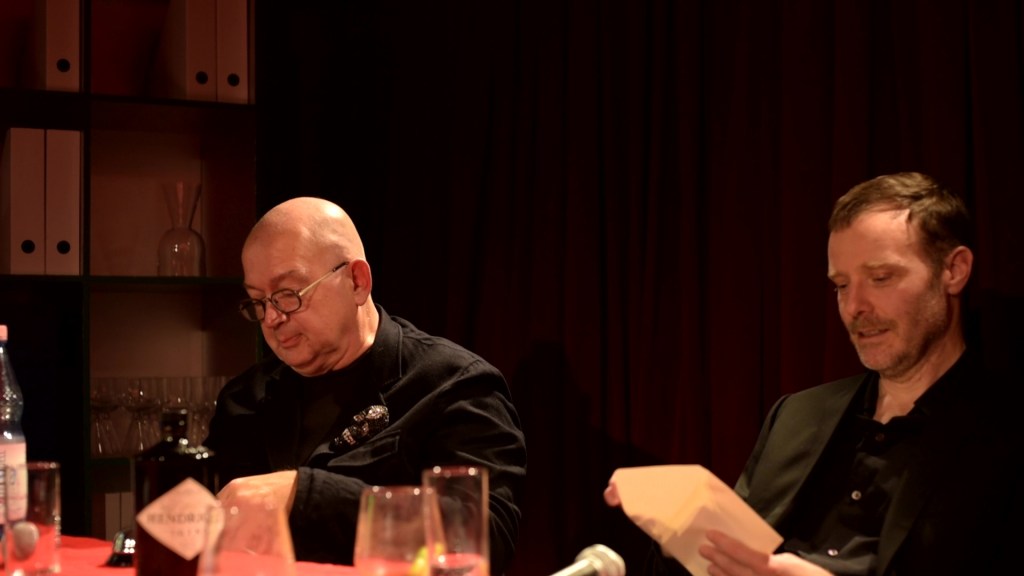
Oct 2019, I was visiting Glasgow School of Art, for a workshop with the Art Writing masters students on Writing as Composing and as Decomposing, and to deliver a talk, below, called Who’s Dying Now?.
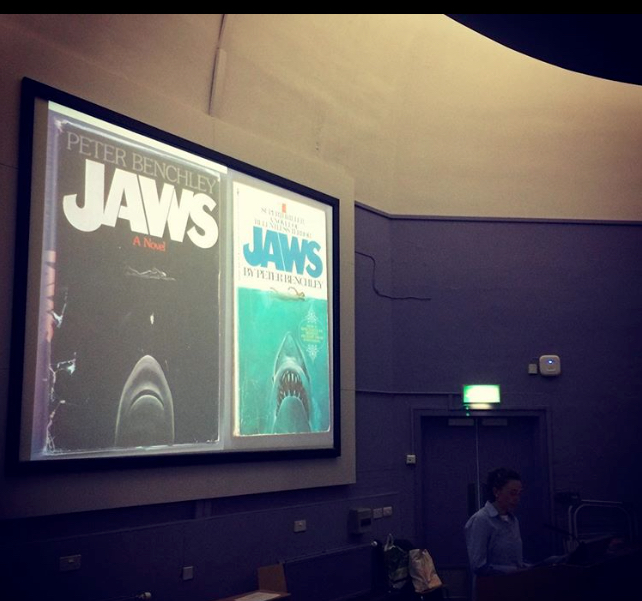
Pic: Julie Duffy; thanks.
I’m a sporadic contributor to David Collard’s live and online salons. In June 2019 I took part in A Night of Pure Moby Dickery. More here. August 2020, I participated in A Lark in the Deep, talking with writer Emma Devlin about Jaws (1975), gender, but mostly cars. Mayor Vaughn’s car is a Cadillac Coup de Ville 1974, in terracotta mist. His blazer defies categorisation.
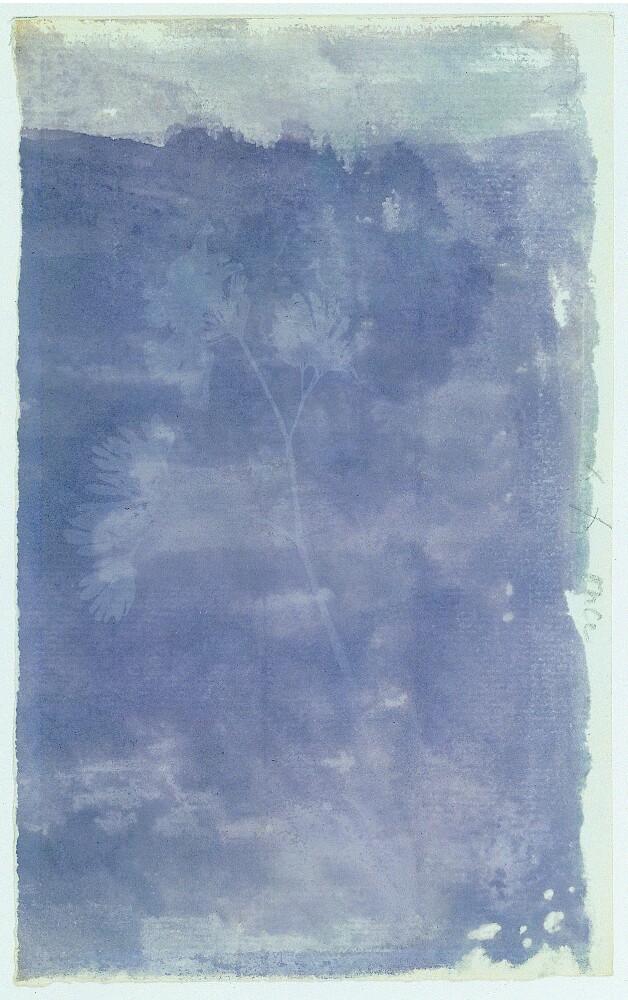
July 2021, an appearance reading an extract called Tangled up in Blue, about archaeologist Leonard Woolley, demolition at the broadcasting epicentre Bvsh Hovse, and silver traces on skulls. “Weirdly electrifying” proclaimed the audience, happily.
Leonard Woolley (in Digging up the Past, his 1930 intro to archaeology) says: “I remember how, when the London County Council cleared the slum area where Bush House stands today, the heaps of broken brickwork and loose mortar were the following year entirely hidden by a mass of purple willow-herb, and people used to take bus rides down the Strand just for the pleasure of looking over the high hoarding at this miracle of wild flowers. That happened in the space of a few months; had the ‘island site’ been left undisturbed for as many years, coarse turf would have covered the mounds and the ruins of Booksellers’ Row would have been buried like those of Silchester” (which is a preserved Roman Camp in Hampshire).
Purple willow-herb over the rubble. Woolley’s fond of civilizations being buried, Biblically flooded, ruined. In fact his main complaint is that not enough major cities are sited by “a conveniently adjacent volcano”, or, as second best, sacked and burnt by invaders. And what does he want this riot for? He’s not an especially bloodthirsty man. It’s because he appreciates that rediscovering buried physical objects before they become scattered, and mapping their relative positions, that this is of vital importance when it comes to recreating the systems and the civilizations of the past. “I must emphasize strongly one thing,” he says: “All excavation is destruction.”
Jan 2020, at the French Institute, Edinburgh, I was talking La Reconnaissance du Requin / Shark Attack! Again, giving my bons mots on Zinedine Zidane, the obituary as formal text, and sudden violence. Here’s Félix Fénéon, in 1906, with his Nouvelles en trois lignes: Une lame sourde enleva sous l’œil maternel l’enfant Mace, qui pêchait dans les roches de Poul-Briel, près de Penmarch.

Dec 2021, to London, for the launch of Laurence A. Rickels’ Critique of Fantasy, along with a screening of his Memoirs of a Vampire Professor. I kicked off by talking about cars, bodies, and lurking, in Twin Peaks, Vertigo, and Chandler’s The Lady in the Lake. A video recording of the evening is available here,

, where you can see me saying:
I’d like to talk through what happens when the first body is discovered, in The Lady in the Lake. Marlow is at the eponymous lake with a drunk caretaker, and as they stand on the pier looking over the calm water, they see something calling their attention. Marlow says:
“Languidly at the edge of this green and sunken shelf of wood something waved out from the darkness, hesitated, waved back again out of sight under the flooring. The something had looked far too much like a human arm.”
It’s the caretaker’s wife, and while he dives to get her out, Marlow drives to town to alert the sheriff. This is where it gets interesting. In Chandler’s book, in 1943, the sheriff fetches the Doc, then they make one more stop, to pick up an idiosyncratic local whose role is to assist the sheriff while bantering about characters who inhabit the mountain-ringed town. This sheriff’s deputy in Chandler’s novel is called Andy, and the three of them – the sheriff, Doc, and Andy – lead Marlow along to unveil the body of the caretaker’s lovely wife. We’ve seen these three figures before, in Twin Peaks, 47 years later.
I’m always talking about Twin Peaks.
On Sunday evenings through 2022, I was the roving reporter for the Glue Factory, giving monthly updates on topics ranging over: in the background of the catastrophe; Citroën cars; the Crimean War and shadows; ears, guitars, shark attacks; graffiti and displaced Hungarians; that sort of thing. Black holes, caviar, and book covers.

Nov 2023, launch of Photo, Phyto, Proto, Nitro, at MOTE102, Edinburgh.
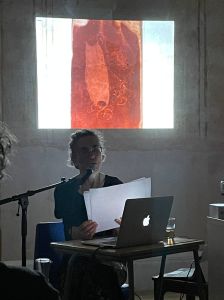
April 2024, a reading at Edinburgh’s Typewronger bookshop with C.D. Rose who is just brilliant. I read an extract about what the guano in a shark’s eyeball tells us about Victorians, a sense of self, and time. Chris talked about the Roundhay Garden footage of 1888. It’s on Youtube here; it’s very short, like the Zapruder footage.
Interesting conversation ensued.

April 2025, opening of Exceptional Subjects, a collaboration between Norman McBeath and me, at Studies in Photography gallery at 6 William Street, Edinburgh.
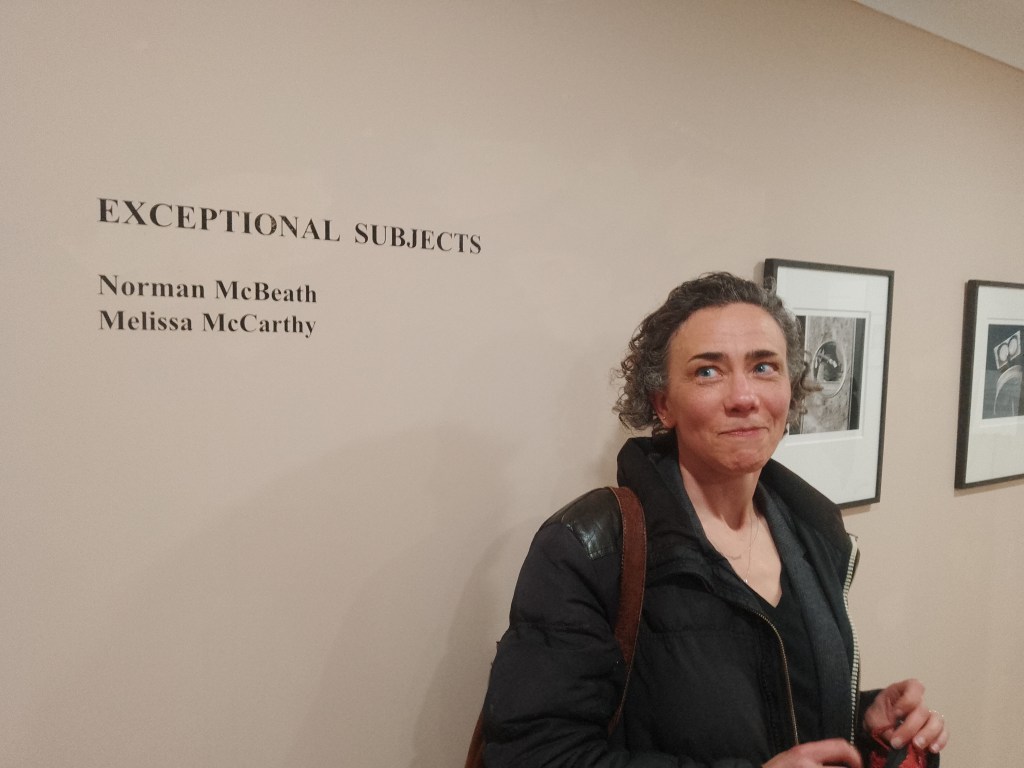
Right so this was an exhibition of Norman’s photographic works. These images, and my text called ‘Delta, Darkness, Ditto’, which is about Norman’s images and about the 1965 Gemini 4 space programme, together comprise the artist’s book EXCEPTIONAL SUBJECTS.
Then, there’s a fancy boxed set version of the prints, with a different text, ‘Back in time and round in circles’. Which is also excellent.
See Norman’s website for details.
… Sometimes we see the full, unbroken extent of the trajectory, we can trace it round and never leave this orbit. But some of the lines travel out of sight, behind another shape, or we lose them into the shadow. That’s ok: even when the full circle is not currently visible, we infer the shape, as if we can really see it there. We follow it round and fill in the gaps; the visual information gets through.
Next up, April 2025, to Liverpool University to give a talk called Absolutely Nebulous.
… I got the very germ of Photo, Phyto from a line in Aeschylus’ Agamemnon , where a herald announces that the Greek ships, returning victorious from Troy, have been wrecked, so that the ocean is “on flower with corpses” or, “strewn with the purple blossoms of the dead.” There’s a range of translations. I like this profusion of words, different ways in English for the eyewitness of trying to convey the same visual image, the fact that a ship has been sunk and there are bodies floating in the water, and they look like something else. This is like that. It’s not just that there are
different translators, each with their own sensibility and vocabulary, writing at different times. It’s the whole concept that words and vision might not quite align, there’s always a fuzziness, a mis- registering, between one and the other, between word and image. Translation just emphasizes this.
May 2025, compereing at photography festival Peckham 24, in a very good talk with artists Clare Hewitt and Olga Grotova.
Nov, 2025, to the Poetry Society in Covent Garden for an event called More Abundant Waters, which is, a string (a shoal?) of writers from the stable of New Jersey’s finest publisher, Sagging Meniscus press.
There was Philip Terry, Julian Stannard, Rufo Quintavalle, Jake Goldsmith, and David Collard. I was reading from my book Photo, Phyto, Proto, Nitro, an extract about varying translations of Aeschylus’ Agamemnon, and flowers in the rubble where there’s now BVSH HOVSE at Aldwych. Because it was topical.
… It’s a dense sentence from Aeschylus’ herald, but a good one, moving in word order from “morning” to “we saw” to “blossoming” to “wrecks.” End on a downer. It’s something I’m going to trace in this book: newness, vision, flowers, blasted trees. Proto, photo, phyto, nitro. …
 Sharks with Melissa McCarthy